
What’s the Squeal?
Know Your Cuts
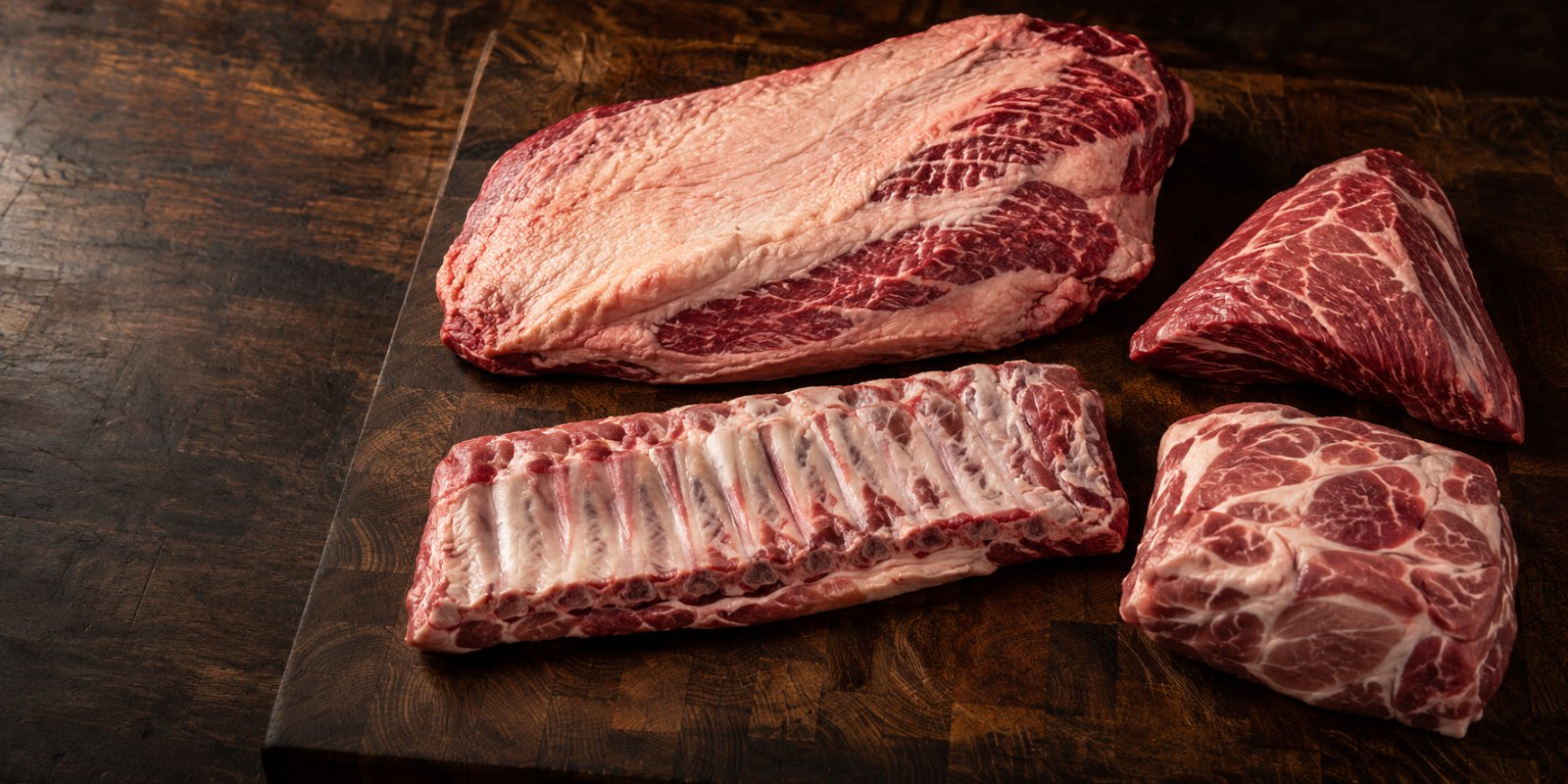
Choosing pork and beef for barbecue
By Paul Holden, Owner & Pitmaster, Willingham’s World Champion BBQ
Part of What’s the Squeal?
Good barbecue starts before you light the fire. The cut you buy, the fat it carries and the way it’s trimmed all affect what comes off the cooker.
John Willingham made understanding the meat part of learning to cook it. That thinking runs through his 1996 cookbook, and it remains part of how we cook at Willingham’s. Thirty years later, there are more labels, breeds and premium options to sort through. The practical question is still the same: what should you buy for the meal you want to make?
Here’s how I look at the pork and beef cuts you’re likely to encounter, with some perspective from competition cooking and our kitchen at Big Shanty Smokehouse.
Pork
Pork shoulder and Boston butt
A whole pork shoulder includes two sections: the Boston butt above and the picnic shoulder below. You’ll often find them sold separately, so check what you’re buying when a recipe calls for “shoulder.”
Boston butt is the upper shoulder, despite the name. It has the fat and connective tissue that make it well suited to the long cooking needed for pulled pork. A whole shoulder gives you both sections to work with, but it also means a larger piece of meat and more handling.
For someone starting with pulled pork, a Boston butt is a sensible place to begin.
Spareribs and St Louis ribs
Spareribs come from the belly side of the rib cage, below the loin backs. A full slab includes the rib tips and cartilage along its lower edge. Trimming that portion away produces the more rectangular St. Louis cut.
At Big Shanty, we buy medium-weight spareribs—4.5-and-down—and trim them St. Louis in-house. I prefer that size for the ribs we serve. It’s a deliberate buying decision, and it’s why comparing rib orders by bone count alone can be misleading. Two bones from one slab can be a very different serving from two bones off another.
The trim has a purpose, too. It gives us rib tips, and suitable meat trimmings go into our housemade sausage.
When you’re shopping, look at the whole slab. Pay attention to how evenly the meat covers the bones and whether the rack has enough thickness to cook consistently. A neat package and an attractive price don’t tell you everything.
Loin back and baby back ribs
Back ribs come from the loin area along the backbone. You’ll see them labeled loin backs, back ribs or baby backs.
Package weights vary, so don’t assume every rack carrying the same name will cook alike. Look at its size, thickness and meat coverage. If you’re cooking several racks together, buying similar ones makes the job easier.
I prefer spareribs for what we do. Back ribs are another option, with a different shape and proportion of meat to bone. Choose the rack you want to eat, then plan around what you actually bought.
Country style ribs
Country-style ribs deserve a closer look at the label. Bone-in versions can come from the blade end of the loin, while boneless packages may contain strips of shoulder.
Those cuts behave differently. Leaner loin meat needs a different approach from shoulder meat with more fat and connective tissue. If you’re unsure which you have, ask the butcher. The name on the package doesn’t give you the whole picture.
Pork loin and tenderloin
Pork loin and pork tenderloin are separate cuts, and they aren’t interchangeable in a recipe.
The loin is the larger cut along the back. It can be sold as a roast or cut into chops, with or without the bone. The tenderloin is a smaller, narrow muscle beneath the loin.
Both are lean compared with shoulder. Know which cut you have before choosing a recipe or deciding how much to buy.
Fresh ham
Ham comes from the hind leg. For barbecue, make sure you understand whether you’re buying fresh pork or a ham that has already been cured, smoked or otherwise processed.
A fresh ham is a substantial piece of meat. It can be a worthwhile choice for a crowd, but the preparation and finished result will differ from a Boston butt. Buy it with a particular meal in mind.
Breed and the fine print
You’ll see Duroc, Berkshire and other breed names on pork labels. At Big Shanty, we buy Duroc-bred pork; in competition, I cook Duroc or Berkshire.
Breed is useful information, but I still want to know what the actual cut looks like and how consistently the supplier delivers it. A name on the package doesn’t replace examining the meat.
Also read the ingredient statement. Some pork contains an added solution that can include salt. That affects how you season it, especially if your rub, marinade or injection already contains salt. Know what the processor has added before you add more.
Beef
Brisket
Brisket comes from the breast or lower chest. A whole packer brisket contains two muscles—the flat and the point—with different shapes and fat distribution.
For our barbecue, I start with the whole packer. The flat gives us the familiar slices, while the point is thicker and generally carries more internal fat. Buying only a closely trimmed flat gives you a different starting point.
When I’m choosing a brisket, I look beyond total weight. Shape, flat thickness, marbling and the amount of trimming it needs all matter. A heavier brisket isn’t automatically the better buy if much of that weight will come off before cooking.
At Big Shanty, we serve Prime brisket. For competition, I use Snake River Farms Gold. Those are different buying decisions for different settings. In competition, I place a premium on getting a brisket whose size and marbling I can work with predictably.
Tri tip
Tri-tip is a triangular cut from the bottom sirloin. It’s smaller and generally leaner than a whole brisket, with a different muscle structure and less connective tissue. You may see it sold as a whole roast or cut into steaks.
When buying a whole tri-tip, check how closely it’s trimmed. One may retain a substantial fat cap while another has most of the exterior fat removed, so package weight alone doesn’t make a fair comparison. Look for marbling within the meat and an even, substantial shape. If you’re buying it for a particular recipe, make sure you’re getting the whole roast rather than steaks.
Understanding grade and Wagyu
USDA Prime, Choice and Select are quality grades. Marbling—the fat within the muscle—is an important part of that grading. Prime generally carries more marbling than Choice, and Choice more than Select.
Wagyu describes cattle genetics; it isn’t another USDA grade above Prime. Producers may use additional marbling scales or their own product tiers, so read what the seller’s designation actually means.
Grade helps narrow the choices. You still need to look at the cut itself. Two briskets with the same grade can differ in shape, thickness and how much usable meat they leave after trimming.
Spend for a reason you understand. The most expensive label doesn’t relieve you of choosing the meat carefully.
Beef ribs
“Beef ribs” can mean several different things.
Back ribs come from the rib area associated with rib roasts. Short ribs can come from the chuck or plate, and they may be sold in several forms. The large, meaty ribs people often picture in barbecue are typically plate short ribs.
Ask which cut you’re being offered. Bone length, meat thickness and how the ribs have been portioned matter more than the generic name. A recipe written for one style may need substantial adjustment for another.
Rib roast
Choose the size of a rib roast for the number of people you’re feeding and decide whether you want it bone-in or boneless.
You’ll often hear it called prime rib, but that name alone doesn’t establish that the beef is USDA Prime. Check the grade separately if that’s part of your buying decision.
Round and rump roasts
These cuts come from the hindquarter and are generally leaner than brisket. They can make good sliced beef, but they need an approach suited to that leanness.
Don’t buy one expecting it to behave like a fatty packer brisket. Decide what you want on the plate first, then choose the cut that gets you there.
Before you buy
Start with the meal. Pulled pork, sliced pork loin, a rack of ribs and sliced brisket call for different qualities in the meat.
Then look closely at what’s in the package. Check the cut, size, trim and any added ingredients. If you’re cooking several pieces together, look for consistency. If the label leaves you guessing, ask questions.
Seasoning and fire matter. Giving yourself the right piece of meat to work with makes both more effective.
Put it to work
Explore our pork and beef recipes, including Willingham’s World Champion Ribs. Use the W’ham® Pairing Matrix to help choose seasonings and sauces for your next cook.
Drawing on the meat-selection guidance in John Willingham’s World Champion Bar-B-Q (William Morrow, 1996), with updates and perspective from Paul Holden.